WasteMate is an independent service and is not affiliated with any council. Always confirm local rules with your council. Report an error.
What to Do With Items That Can't Be Recycled at All
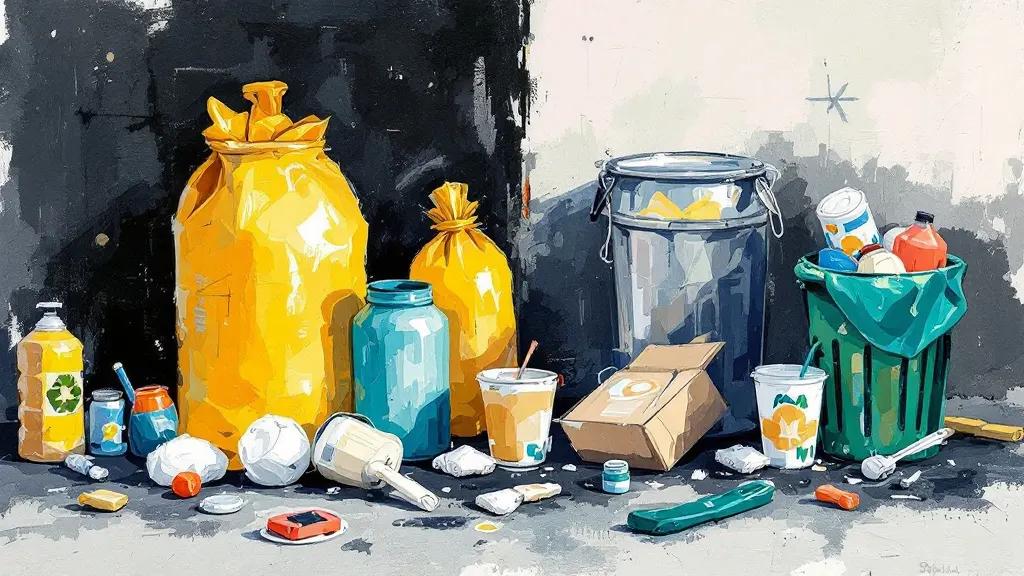
No matter how careful we are, some things simply can't be recycled in New Zealand — and knowing what to do with them matters. Putting non-recyclable items in your yellow kerbside bin in the hope they'll be sorted out is called "wish-cycling," and it actually causes problems. Contaminated loads cost money to process, can send entire truckloads to landfill, and slow down the recycling of materials that genuinely could have been saved. Being honest about what belongs in the rubbish is part of doing the right thing.
Common items that truly can't go in kerbside recycling include things like disposable nappies, broken ceramics and drinking glasses, laminated or foil-lined packaging (think chip packets and some coffee cups), polystyrene foam, tissues and paper towels, and most flexible plastics unless they go through a dedicated scheme. Other materials, like certain plastics coded 3, 6 or 7, are often not accepted even if they carry a recycling triangle. The standardised yellow bin only takes bottles, containers, paper, cardboard, glass bottles and jars, tins and cans — so when in doubt, these genuinely non-recyclable items belong in your red general-waste bin.
Before you throw something away, it's worth checking whether a specialist route exists. Soft plastics such as bread bags and bubble wrap can go to participating supermarket drop-off bins through the Soft Plastics Recycling Scheme. Batteries, electronics, light bulbs, paint and garden chemicals should never go in any wheelie bin — these are handled by product stewardship schemes, transfer stations, or community hazardous-waste collections. Your local transfer station or community recycling centre can often take odd items like scrap metal, timber, or large polystyrene that your kerbside service won't.
For the things that really do have no recycling pathway, the responsible option is landfill via your general rubbish — but the smarter long-term move is to create less of it in the first place. Reducing what you buy, choosing products with less packaging, picking reusable over single-use, and repairing rather than replacing all cut down on non-recyclable waste before it ever enters your home. A chip packet you never bought is one you never have to throw away.
Because rules vary considerably around the country, always check your local council website for exactly what your area accepts and where to take special items. Many councils publish handy A–Z waste guides, and some run free drop-off days for hard-to-dispose items. Taking a few minutes to confirm the right destination saves contamination, keeps recycling working properly, and means the genuinely useless stuff ends up where it belongs.
The practical takeaway: don't wish-cycle. If something can't be recycled, put it confidently in the red bin or find its proper specialist route, and focus your energy on buying less of the stuff that can't be recycled at all. Clean, honest sorting is far more valuable than hopeful guessing.