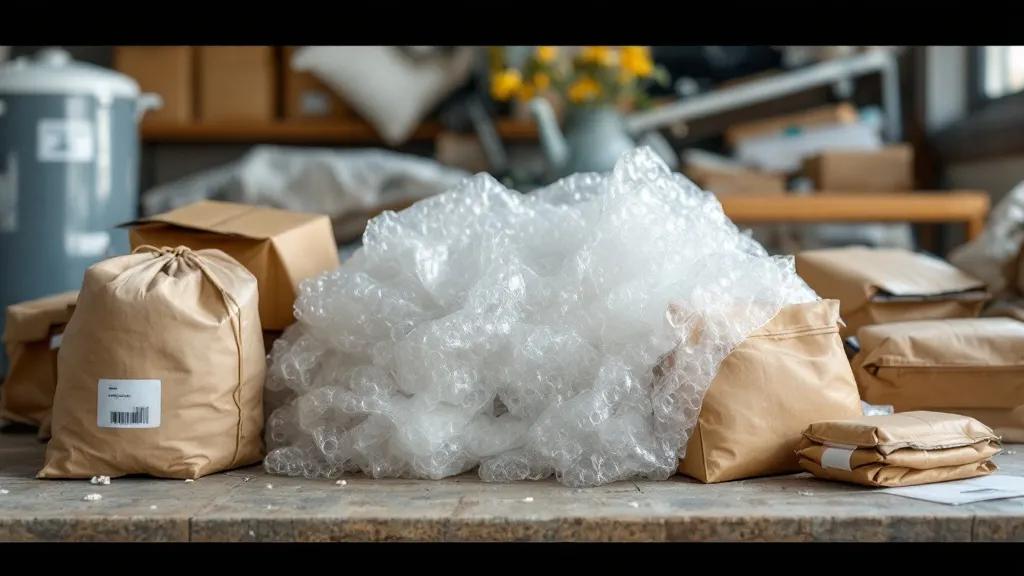
With online shopping now part of everyday Kiwi life, most households end up with a steady stream of bubble wrap, air pillows and courier satchels. It's tempting to scrunch them into the yellow recycling bin, but that's exactly where they cause problems. Soft, scrunchable plastics tangle in the sorting machinery at recycling facilities, contaminate other recyclables, and often end up sending whole loads to landfill. The good news is there are better routes for these materials
so they don't have to be wasted.
The key test is the scrunch test: if a plastic scrunches into a ball in your hand and stays scrunched, it's a soft plastic and does not go in your kerbside recycling bin. Bubble wrap, air-filled packing pillows, courier satchels (the plastic postage bags), bread bags, and the plastic wrap around toilet paper all fall into this category. Across New Zealand, these can be recycled through the Soft Plastics Recycling Scheme, which runs collection bins at many supermarkets and retailers such as The Warehouse and selected Countdown, New World and Pak'nSave stores. Check the scheme's website for your nearest drop-off point, as availability varies by region.
Before you drop them off, a little preparation helps. Make sure satchels and bubble wrap are clean, dry and empty
remove any paperwork, courier labels with personal details, and sticky tape where you can. Pop air pillows if you like to save space. Keep your soft plastics together in one bag at home, then take the whole lot in next time you're doing the groceries. Materials collected through the scheme are turned into things like fence posts, garden edging and cable covers, so keeping them clean genuinely makes a difference to what can be made.
Better still, reuse comes before recycling. Bubble wrap is brilliant for protecting items when you're moving house, storing fragile crockery, or sending your own parcels
so set some aside rather than binning it. Courier satchels can often be turned inside out and reused for return postage or sending gifts, and many are designed to be used at least twice. Local 'Buy Nothing' groups, community pātaka, and op shops sometimes welcome clean packaging materials, and small businesses or market stallholders are often grateful for a supply of bubble wrap and satchels.
It's also worth reducing the amount that comes through your door in the first place. When ordering online, look for retailers offering paper-based or compostable packaging, and tick the 'minimal packaging' option where it's offered. Some couriers now use paper satchels and cardboard, which can go straight into your kerbside recycling once flattened
a far simpler outcome than soft plastics.
The simple takeaway: keep bubble wrap and plastic courier satchels out of your yellow bin. Reuse what you can, take the rest to a soft plastics drop-off point clean and dry, and choose paper-based packaging when you shop online. A few seconds of sorting keeps these plastics in use and out of landfill.
Find sites and drop-off points near you that handle the items covered in this guide.
Find soft plastics drop-off points near you