WasteMate is an independent service and is not affiliated with any council. Always confirm local rules with your council. Report an error.
What Can Go in Your Yellow Recycling Bin in New Zealand
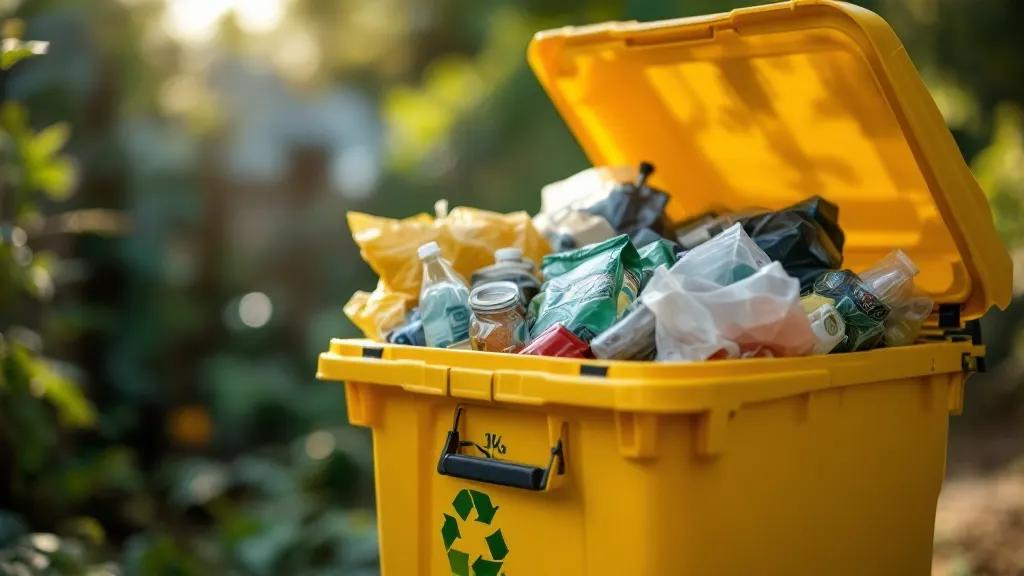
Getting your yellow recycling bin right matters more than you might think. When the wrong things end up in it, whole truckloads can be contaminated and sent to landfill instead of being recycled. Since 2024, New Zealand has standardised kerbside recycling, which means the list of accepted materials is now the same across most councils \u2014 a welcome change from the old days of every region doing things differently.
There are four main groups of materials that belong in your yellow bin. First, glass bottles and jars (though in many areas these go in a separate glass crate rather than the yellow bin \u2014 check your local setup). Second, paper and cardboard, including newspapers, magazines, office paper, and flattened boxes. Third, plastics marked with recycling codes 1, 2 and 5 \u2014 things like milk bottles, ice-cream containers, yoghurt pots and clear drink bottles. And fourth, aluminium and steel cans, such as drink cans and food tins.
Just as important is knowing what to keep out. Plastics numbered 3, 4, 6 and 7 are not accepted at kerbside and should go in your red general-waste bin. Soft plastics \u2014 anything you can scrunch in your hand, like bread bags, chip packets and plastic wrap \u2014 must never go in the yellow bin, but you can drop them at participating Soft Plastic Recycling bins found at many supermarkets. Other common mistakes include nappies, food scraps, clothing, batteries, and so-called \u201ccompostable\u201d or \u201cbiodegradable\u201d packaging, none of which belong in kerbside recycling.
How you prepare items makes a real difference too. Give containers a quick rinse so they are empty and clean \u2014 they don't need to be spotless, just free of food residue that could spoil a whole load. Leave lids off and put them in the rubbish, as small loose lids often fall through sorting machinery. Keep everything loose in the bin rather than bagged, because plastic bags jam the equipment and bagged recycling is frequently sent straight to landfill.
A few items cause confusion because they seem recyclable but aren't. Pizza boxes stained with grease, waxed or coated paper cups, tissues, receipts, and crockery or drinking glasses all go in general waste. When in doubt, a good rule is \u201cif you're not sure, leave it out\u201d \u2014 a single wrong item is less harmful than contaminating an entire load.
The simplest takeaway is to remember bottles, jars, paper, cardboard, tins and rigid plastics 1, 2 and 5 \u2014 clean, empty and loose. For anything unusual, your local council website has a handy bin-finder or A\u2013Z guide, and that's always the best place to confirm the details where rules can still vary by area.