WasteMate is an independent service and is not affiliated with any council. Always confirm local rules with your council. Report an error.
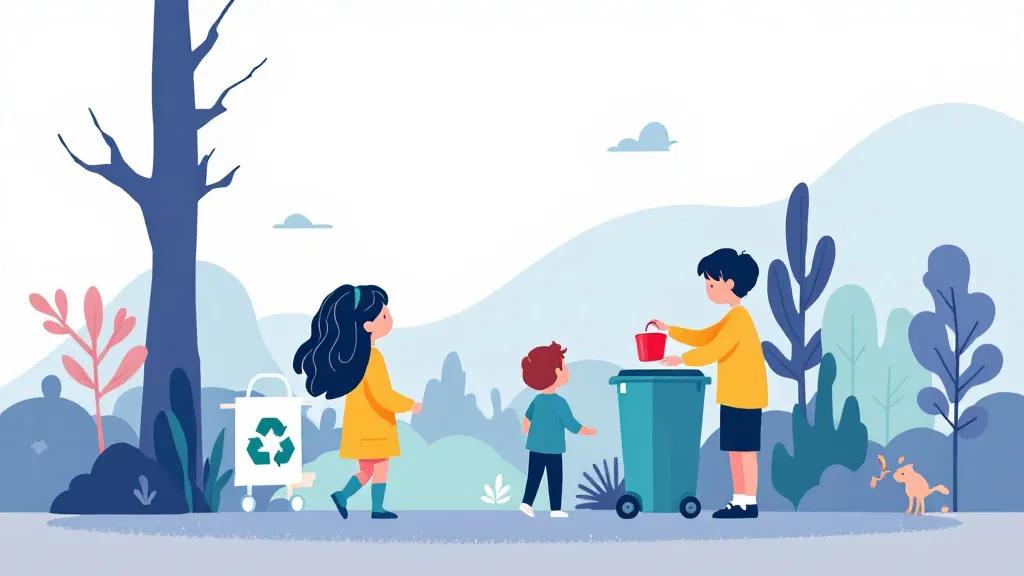
How to Talk to Kids About Recycling and Waste
Children learn an enormous amount by watching the adults around them, and how we handle rubbish and recycling is no exception. If we treat sorting the yellow bin, saving food scraps, and avoiding waste as a normal part of daily life, kids pick that up without it ever feeling like a lecture. Starting these conversations early matters because the habits formed in childhood tend to stick — and today's tamariki will inherit the landfills, rivers, and coastlines we leave behind. The good news is you don't need to be an expert; you just need to make it simple, hands-on, and age-appropriate.
For younger children, keep the message concrete and visual. Rather than explaining abstract ideas about carbon or decomposition, focus on simple sorting games: this clean plastic bottle goes in the yellow bin, this banana peel goes in the food-scraps caddy, and this chip packet goes in the red general-waste bin. Let them be the 'bin boss' who decides where things go, and gently correct mistakes without making a big deal of it. A colour-coded chart stuck above your bins, maybe with pictures they've drawn, turns sorting into a fun daily job rather than a chore.
With older kids and teenagers, you can go deeper into the 'why'. Talk about how our standardised kerbside recycling only works when items are clean, empty, and actually accepted — and how one dirty nappy or greasy pizza box can contaminate a whole load. Explain that 'reduce' and 'reuse' sit above recycling for a reason: the best rubbish is the rubbish we never create. This is a great age to introduce product stewardship schemes too, like dropping off old batteries, e-waste, or soft plastics at collection points, so they understand recycling goes beyond the bin at the gate.
Make it practical by involving them in real decisions. Take kids along to the transfer station or a community recycling centre so they can see where things actually end up. Get them helping to rinse containers, turn the compost, or pack a litterless lunchbox with reusable containers instead of single-use wrap. Challenges work brilliantly — see who can produce the least landfill rubbish in a week, or set a family goal to cut down on packaging when you shop. When kids have ownership, they feel proud rather than nagged.
It helps to be honest about the limits too. Not everything with a recycling symbol can actually go in the yellow bin, and rules vary between councils, so make checking your local council's guide part of the routine together. Avoid overwhelming children with doom-and-gloom; frame waste as a problem we can all help solve rather than a catastrophe they're responsible for fixing alone. Celebrate small wins and model patience when mistakes happen.
Ultimately, talking to kids about recycling and waste is less about a single big conversation and more about hundreds of small everyday moments. Keep it positive, keep it hands-on, and let them see you making an effort yourself. Do that consistently and you'll raise young New Zealanders who sort without thinking, waste less by instinct, and genuinely care about the whenua they call home.