WasteMate is an independent service and is not affiliated with any council. Always confirm local rules with your council. Report an error.
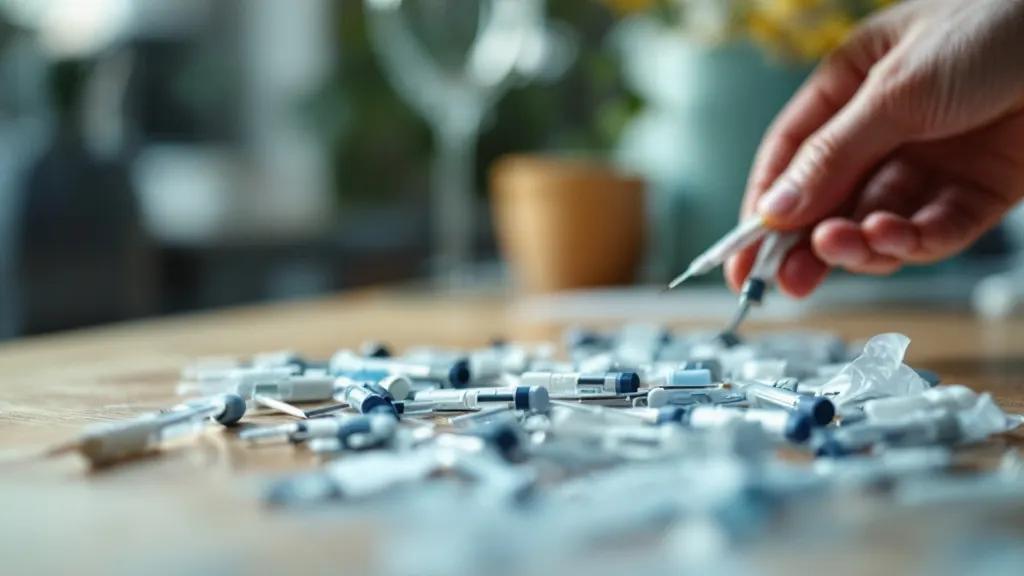
How to Dispose of Medical Sharps and Needles Safely
If you or someone in your household manages diabetes, an injectable medication, or another condition that requires needles, safe sharps disposal really matters. Used needles, lancets, syringes and pen needles can carry blood-borne infections and cause nasty injuries to whoever handles them next — that includes your family, kerbside collection crews, and workers at transfer stations and recycling facilities. Loose sharps thrown into the rubbish or, worse, the yellow recycling bin, are a genuine hazard, so they should never go into any of your household bins.
The golden rule is to contain sharps in a puncture-proof, sealable container the moment you've finished with them. The safest option is a proper yellow sharps container, often available from your pharmacy, GP, or diabetes supplier. If you don't have one, a rigid plastic bottle with a screw-top lid — such as a laundry detergent or bleach bottle — can work as a temporary measure. Avoid glass jars or thin containers that a needle can pierce, and never use a container that others might mistake for something recyclable or reusable.
As you fill the container, keep it upright, out of reach of children and pets, and never try to recap needles by hand or push sharps down to make more room. Once it's about three-quarters full, seal the lid firmly and tape it shut. Don't overfill it — a jammed lid or protruding needle defeats the whole purpose. Label the container clearly as 'sharps' or 'medical waste' so nobody opens it by mistake.
When the container is full and sealed, take it to an approved drop-off point rather than putting it in any kerbside bin. Many pharmacies accept full sharps containers, and some offer an exchange service where you swap a full container for an empty one. Your GP, local medical centre, or a Diabetes NZ contact can point you to the nearest option. Some council transfer stations and community recycling centres also take sharps as part of their hazardous-waste services, but availability varies from region to region, so it's always worth a quick call or a check of your local council website first.
A few extra situations are worth knowing about. If you find a discarded needle in a public place, don't pick it up with bare hands — use tongs or a scoop, place it in a rigid container, and contact your local council, which can arrange safe collection. If you're travelling, carry a small purpose-made sharps container so you're never tempted to bin a needle loose. And if your needles are attached to a device like an insulin pen or an EpiPen, ask your pharmacist how to dispose of the whole unit safely, as the plastic body generally can't go in normal recycling either.
The practical takeaway is simple: contain sharps immediately in something puncture-proof, seal it before it's full, and drop it at a pharmacy, medical centre, or an approved council facility. It takes only a moment of care, and it protects everyone who handles waste after you — check with your local council or pharmacy to confirm the closest disposal point in your area.