WasteMate is an independent service and is not affiliated with any council. Always confirm local rules with your council. Report an error.
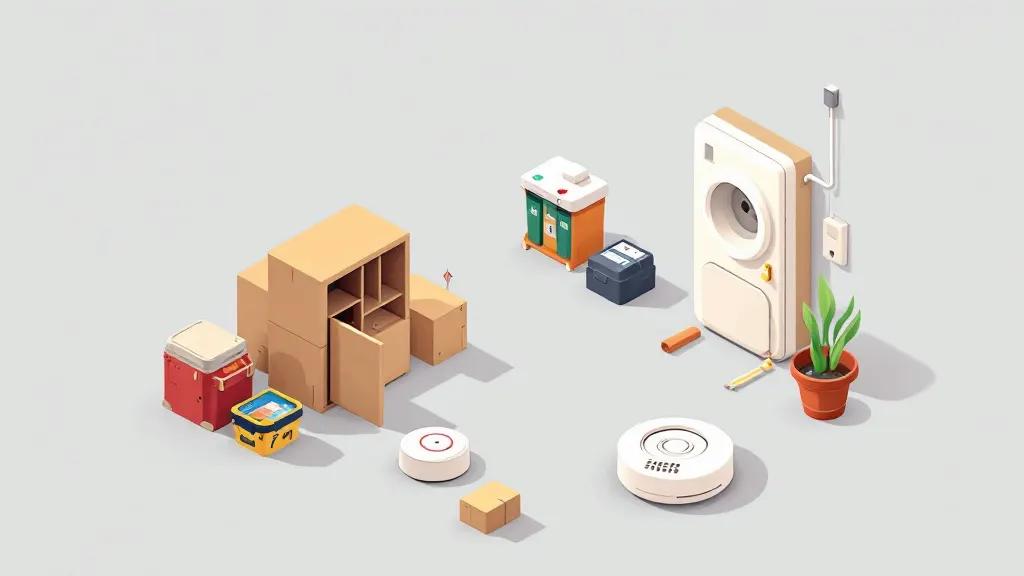
Getting Rid of Old Smoke Alarms and Detectors
Smoke alarms save lives, but when they reach the end of their roughly ten-year lifespan they turn into a small disposal puzzle. Tossing them straight into the red general-waste bin isn't ideal, because some contain a tiny radioactive source and most contain batteries and electronics that don't belong in landfill. Getting rid of them thoughtfully keeps hazardous bits out of the ground and out of the kerbside recycling stream, where they can't be processed anyway.
The first job is to work out which type you have, as it's usually printed on the back or base. Ionisation alarms contain a minute sealed source of Americium-241, a radioactive element. The amount is extremely small and poses no risk while the alarm is intact and mounted on your ceiling, but it does mean the unit shouldn't be crushed, opened, or burned. Photoelectric alarms don't contain a radioactive source and are generally the recommended choice these days, but they still hold electronics and a battery. Either way, treat a dead alarm as e-waste rather than everyday rubbish.
Do not put smoke alarms in your yellow kerbside recycling bin. They aren't accepted, the mixed materials can't be sorted, and an ionisation unit is not something recycling workers should be handling loose. If your alarm has a removable 9-volt or AA battery, take that out first and drop it into a battery recycling collection point — many supermarkets, hardware stores and libraries host these bins. Sealed ten-year lithium alarms can't have the battery removed, so the whole unit needs to go through an e-waste or hazardous route.
Your most reliable option is to take the alarm to a transfer station or community recycling centre that accepts e-waste and hazardous household items. Ring ahead or check your local council website first, because acceptance varies from place to place and some sites have specific handling for ionisation units. A few manufacturers and specialist recyclers also run take-back arrangements for old detectors, so it's worth a quick look at the brand's website or asking at the store where you buy the replacement.
When you're carrying an old alarm around, keep it whole. Don't try to prise it apart to salvage the radioactive source, and never put it through a home shredder or into a fire. If you genuinely can't find a local e-waste or hazardous drop-off and your council confirms there's no other route, an intact ionisation alarm in general waste is a last resort — but always check locally first, as rules differ around the country.
The practical takeaway: replace alarms every ten years, note the type on the casing, pull out any removable battery for battery recycling, and take the unit itself to a transfer station or recycling centre that handles e-waste and hazardous goods. A two-minute check of your council's website will point you to the right drop-off and keep those small radioactive and electronic parts safely out of landfill.
Where to take it in New Zealand
Find sites and drop-off points near you that handle the items covered in this guide.
Find battery recycling drop-off points